How Often Should I Replace My AC Filter? (DFW Edition)
EPA-certified guidance on AC filter replacement frequency for Dallas-Fort Worth homes — pollen loads, peak summer dust, and what monthly checks actually look like.

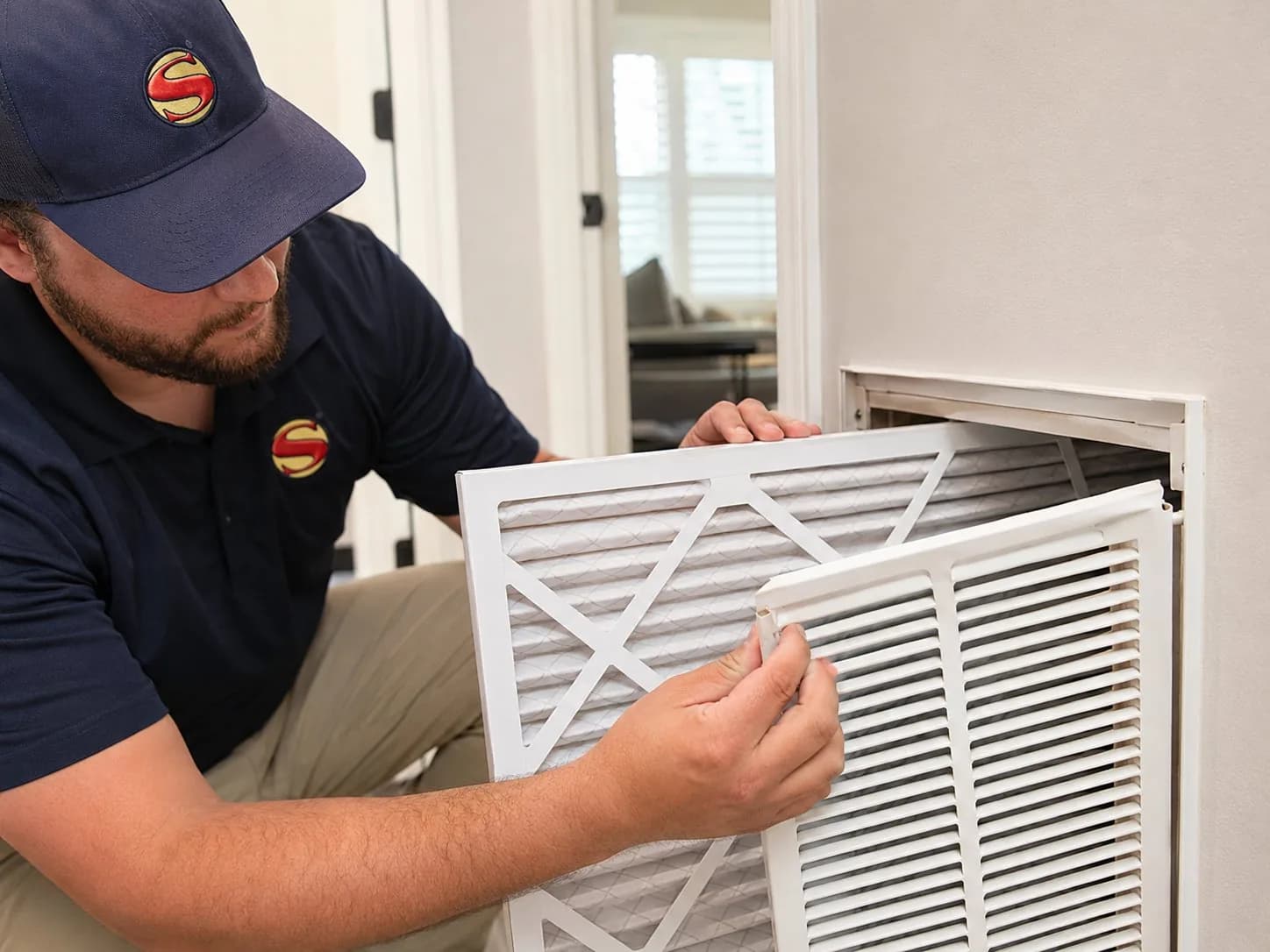
Maintenance · April 15, 2026
By the Super Heating & Air Team
Super Heating & Air, an EPA-certified HVAC company serving the Dallas–Fort Worth metroplex, recommends most DFW homeowners check their AC filter every 30 days and replace it every 60 to 90 days during peak season. The exact cadence depends on filter type, occupancy, pets, and how aggressively the system runs in summer.
The short answer
For a typical 1-inch pleated filter in a North Texas home with 2–4 occupants and one or two pets, a 60-day replacement interval is a reasonable default. Bump that to 30 days during July and August when AC runtime is highest, and stretch to 90 days if you have no pets and a sealed home with low dust load.
Why DFW filters clog faster
A few regional realities make North Texas filters work harder than the national average:
- Long peak-season runtime. AC systems in Corinth, Denton, Lewisville, and across the metroplex run roughly 8–14 hours per day during July and August. More airflow through the filter means more particulate captured per week.
- Spring pollen + dust. DFW's spring oak and cedar pollen season is intense. Even sealed homes get measurable filter loading from spring pollen tracked indoors.
- Construction dust. Newer subdivisions in Frisco, Prosper, and the north DFW growth corridor have ongoing nearby construction. Fine dust drift loads filters faster than fully built-out neighborhoods.
Filter type matters more than calendar date
Different filter MERV ratings have very different replacement profiles:
- MERV 8 (basic pleated): 60 days typical, 30 days in peak summer. Cheapest option, lowest filtration of fine particulates.
- MERV 11–13 (high-efficiency pleated): 60–90 days. Captures finer dust, pollen, and pet dander. Most homes do well at this tier.
- MERV 14–16 (HEPA-equivalent): 90–180 days, but only if your system is rated for the higher pressure drop. Many older furnaces aren't — installing a too-restrictive filter can damage the blower motor.
If you're not sure what MERV rating your system can handle, our HVAC tune-up includes a filter recommendation specific to your equipment.
Signs your filter is overdue
You don't need a calendar to know when a filter needs replacement. Watch for:
- Visibly gray or matted filter face — most filters change from white to gray well before the 60-day mark
- AC running longer than usual to hit set-point temperature
- Higher-than-normal energy bills compared to the same month last year
- Dust accumulating on supply registers shortly after cleaning
- Allergy symptoms worsening indoors
What about washable filters?
Washable filters can work, but their actual MERV rating is lower than equivalent disposable filters and they require disciplined maintenance — rinse-and-dry every 30 days. Most DFW homeowners we work with eventually switch back to disposables for the convenience, especially if filter loading varies seasonally.
When filter changes aren't enough
If you're changing filters on schedule and still seeing dust, allergy symptoms, or efficiency drops, the issue may be ductwork rather than the filter itself. Our diagnostics service can identify duct leaks, return-air imbalance, or other airflow issues that filter changes won't fix.
Common questions
Related articles
Maintenance
Signs Your HVAC Needs a Tune-Up
Six warning signs your DFW HVAC system needs professional attention — from rising energy bills to strange noises. EPA-certified guidance from Super Heating & Air.
Read articleReplacement
When to Repair vs. Replace Your HVAC System
EPA-certified framework for deciding between HVAC repair and replacement — the half-the-cost rule, age, efficiency, and getting a written evaluation.
Read articleNeed an EPA-certified hand?
Most service requests confirmed within hours. Same-day dispatch for emergencies across DFW.