AC vs. Heat Pump in Texas: Which Is Right for Your Home?
EPA-certified guidance on choosing between traditional AC + furnace vs. heat pump systems for North Texas homes. Climate fit, cost, efficiency, and lifecycle.

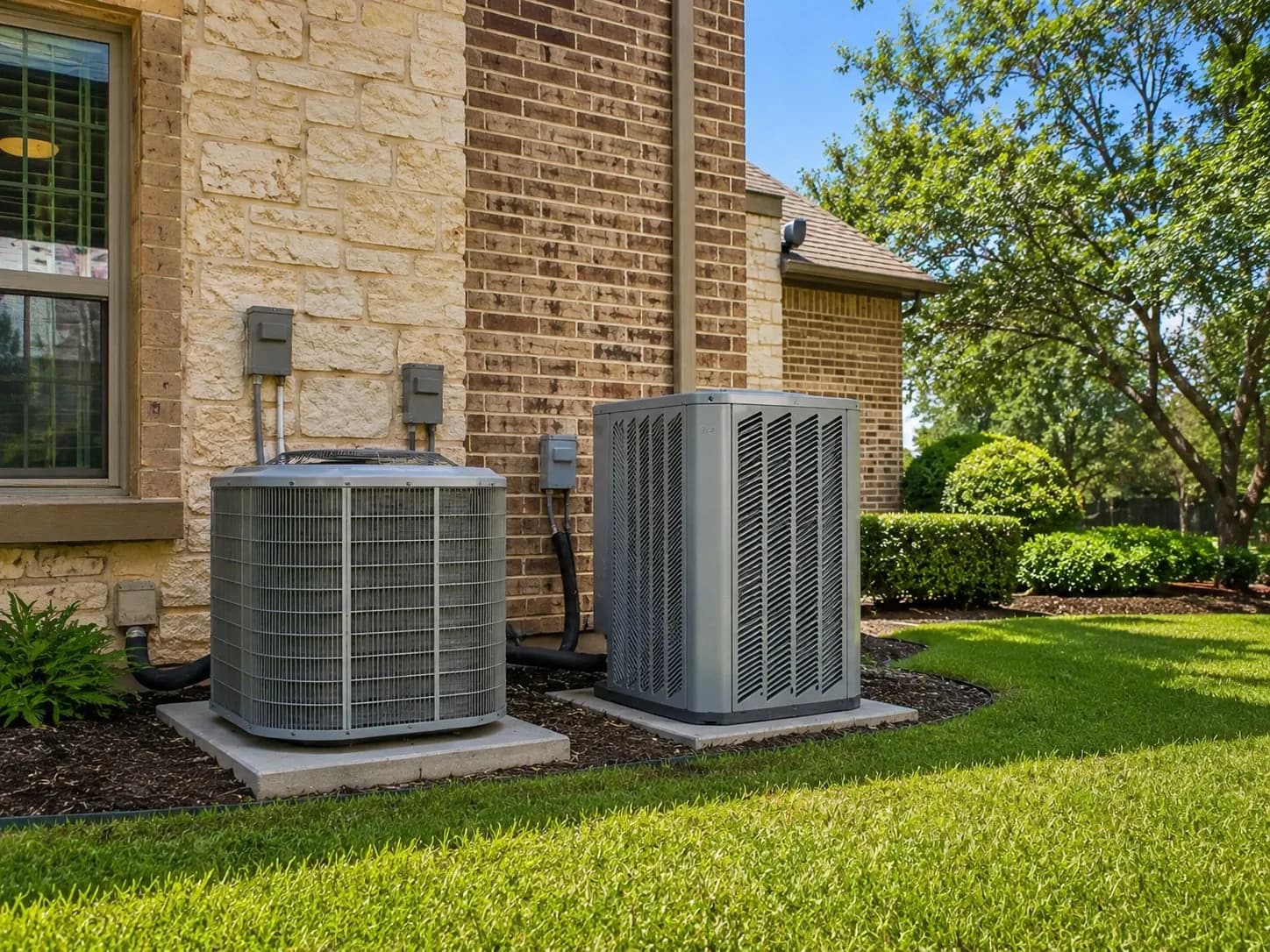
Installations · April 29, 2026
By the Super Heating & Air Team
Super Heating & Air, an EPA-certified HVAC company serving the Dallas–Fort Worth metroplex, installs both traditional AC + gas furnace systems and modern heat pumps across Carrier, Trane, and Lennox lines. The right choice depends on climate fit, fuel costs, equipment lifecycle, and what your existing infrastructure supports.
The short answer for DFW
For most North Texas homes, a high-efficiency AC + gas furnace is the historical default — natural gas heating has been cheap and DFW winters are relatively mild. But heat pump efficiency has improved dramatically in the last five years, and a modern variable-speed heat pump now competes effectively with gas heat across DFW's typical winter low temperatures (mid-30s on average, occasional dips into the teens).
How heat pumps work in cold weather
A heat pump moves heat instead of generating it. In cooling mode it works exactly like an AC. In heating mode it reverses, extracting heat from outside air (yes, even cold air contains heat energy) and delivering it indoors. Performance drops as outdoor temperature falls — most modern heat pumps lose efficiency below ~25°F, and conventional units below ~17°F need supplemental heat.
For DFW: a typical winter has only 5–15 hours per year below 17°F, but those hours typically cluster during the worst arctic blasts. Modern variable-speed cold-climate heat pumps maintain capacity to ~5°F, which covers nearly all DFW winters except outlier events.
Cost comparison
Three cost dimensions matter:
- Equipment + installation upfront. AC + gas furnace systems are typically the cheapest first-cost option in DFW because the gas-line infrastructure is already there. Heat pumps cost ~10–25% more upfront for equivalent capacity.
- Operating cost. Depends on your electric and gas rates. In low-electricity-rate areas, heat pumps win on a yearly basis. In high-electricity / cheap-gas areas, gas furnaces win. DFW currently sits roughly even — favor the more efficient option for marginal advantage.
- Lifecycle. Both system types last 12–18 years with proper maintenance. Heat pumps run year-round (cool + heat) so total runtime hours are higher; gas furnaces run only in winter.
When AC + gas furnace makes more sense
- You already have gas service and a furnace less than 8 years old. No reason to abandon working equipment.
- You experience occasional but predictable below-15°F winters. Backup heat strips on a heat pump get expensive to run during sustained cold snaps.
- Lowest possible upfront cost is the priority. AC-and-furnace bundles tend to come in below heat pump quotes for equivalent capacity.
When a heat pump makes more sense
- You have no existing gas infrastructure. Adding a gas line is expensive; a heat pump uses your existing electrical service.
- You want one system to handle both heating and cooling. Simpler maintenance, single equipment lifecycle, single warranty.
- You're optimizing for efficiency. Modern variable-speed heat pumps run more efficiently than even 95% AFUE gas furnaces in most DFW operating conditions.
- You're considering solar. Heat pumps pair well with solar panels because all consumption is electrical.
Hybrid systems split the difference
Dual-fuel hybrid systems combine a heat pump with a backup gas furnace. The heat pump handles most of the year efficiently; the gas furnace kicks in below ~30°F when heat pump efficiency drops. For DFW homeowners with existing gas service who want best-of-both, this is often the right answer. We install hybrids on Carrier, Trane, and Lennox platforms.
What we do during an installation estimate
Every Super HVAC installation estimate starts with a Manual J load calculation — measuring your home's actual heating and cooling load based on insulation, window area, orientation, and occupancy. We don't size systems based on square footage alone. Right-sized equipment runs more efficiently, dehumidifies better, and lasts longer than oversized equipment that short-cycles.
If you're trying to decide between system types, we walk you through the tradeoffs based on your specific home, existing equipment age, and gas vs. electric rates. No high-pressure pushing toward one option over another. See our pricing for typical service rates; installation estimates are free.
Common questions
Related articles
Replacement
When to Repair vs. Replace Your HVAC System
EPA-certified framework for deciding between HVAC repair and replacement — the half-the-cost rule, age, efficiency, and getting a written evaluation.
Read articleMaintenance
Signs Your HVAC Needs a Tune-Up
Six warning signs your DFW HVAC system needs professional attention — from rising energy bills to strange noises. EPA-certified guidance from Super Heating & Air.
Read articleNeed an EPA-certified hand?
Most service requests confirmed within hours. Same-day dispatch for emergencies across DFW.